
A Long Game
[my conversation with Elizabeth McCracken]

First things first, please feel free to pause right here, drop whatever it is you might be doing, and preorder Elizabeth McCracken’s marvelous new A Long Game: Notes on Writing Fiction, which goes on sale in the U S of A this coming Tuesday, December 2 (and, over on the other side of the big water, January 1). Preorders and first-week sales are crucial to the life and success of any book, so if you want to show some love to a favored writer, get on board! (And/or be sure to ask your local library to stock something you want to read!)
And now, without further, as they say, ado, here’s the conversation I had with dear Elizabeth earlier this month.
Benjamin: “Start at the start,” you say at the very start of your book. I’d like to start at our start, yours and mine, when I was first introduced to you, not in person (though we’ve subsequently met a handful of times, not nearly enough), by the editor whom you refer to in A Long Game as simply, as “the editor,” who had just, at the time (the time seems to have been 2008; I had to look that up; I can never remember dates), joined the group at Penguin Random House of which I was then the copy chief and who became, if not quite one of my bosses, certainly someone to whom I was highly answerable. Either she summoned me up to her office or I simply dropped up to her office, I don’t recall which, and we had a lovely conversation—the first of many lovely conversations—and as we were wrapping things up she drifted over to her bookcase and plucked down two books that she insisted I read—because she loved them, of course, but also because they’d be a means of our getting to know each other. One was Rohinton Mistry’s A Fine Balance. The other was The Giant’s House, by one Elizabeth McCracken. I immediately devoured them both. (And they’re both so good!) In A Long Game you discuss your own relationship with this editor, who was of course your editor (she was also, ultimately, the keyest possible player in my writing my own book, but this conversation is about you, not about me, so be that as it may), and its eventual professional rupture, which was, as you describe it, mystifying and painful. (Though it later, to some extent, righted itself, at least personally.)
All of which is a very long-winded clearing of the throat to my wanting to ask after your current state of happiness and contentment (I think they’re not quite the same thing) as a writer and as a writing teacher.
How’s it all going?
Elizabeth: Hello, Benjamin! For me, our start was on social media—I was about to write of blessed memory, but that’s not quite right. We met on what used to be Twitter, in 2008 or 2009. Long before Dreyer’s English! You were one of the first people I encountered who was really brilliant at social media: funny, stylish, pithy.
As far as how I am—I am specifically in the process of moving to England with my limey ball-&-chain, and finishing teaching at the University of Texas at Austin, where I have taught for sixteen years. I am at the moment sitting in Austin. I am going to miss teaching immensely, and I’m sure I’ll find it again in some form, but I’m also looking forward to some uninterrupted reading and writing time. It’s been a while since I’ve lost myself in novel writing.
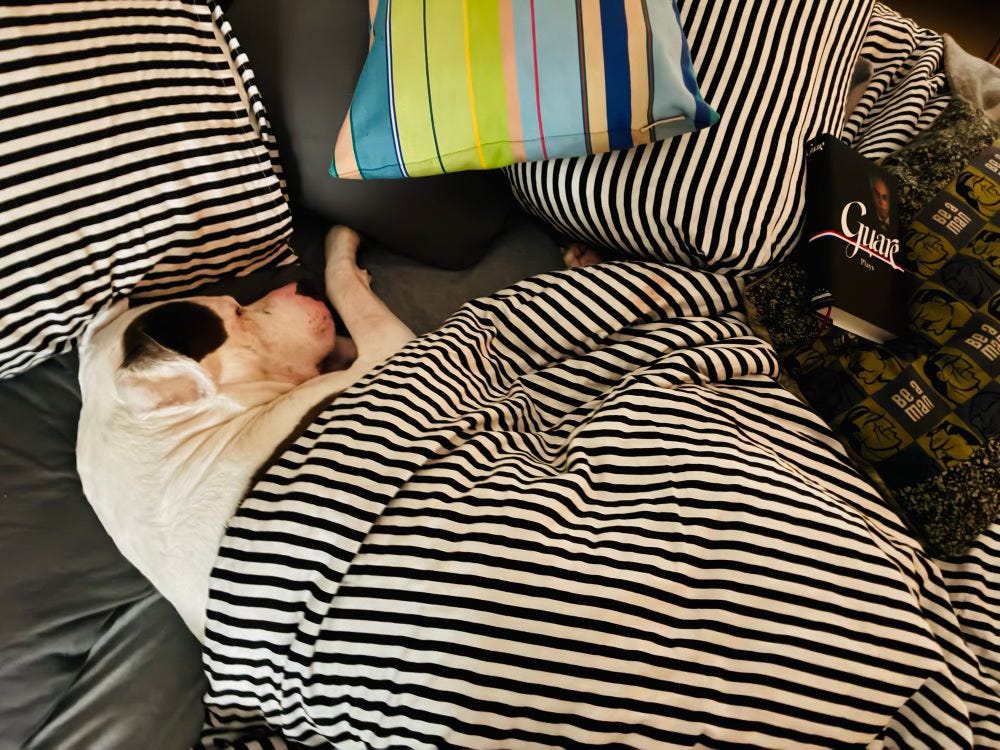
Benjamin: I situated myself in bed with my usual half dozen pillows, plus our dog, Sallie, with the intention of reading your book as any normal reader reads a book, more or less quietly and from beginning to end, but within literal seconds I got up to get a pen because I needed, and not just for the sake of this conversation we’re having, to circle things, and take notes, and mark the margins with periodic exclamation points.
I was reading, I should note, a bound galley. I never write in my finished books. Do you?
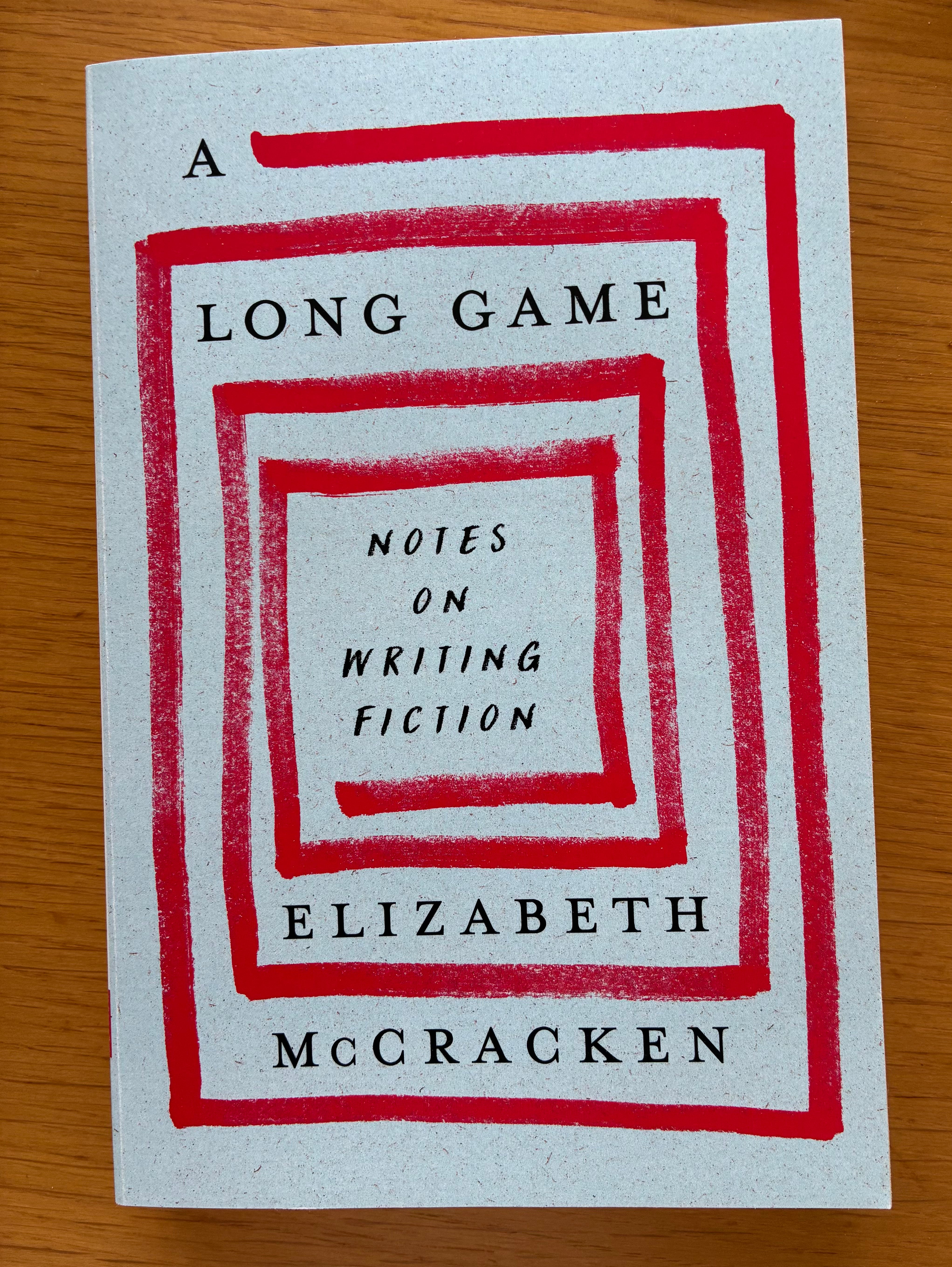
Elizabeth: I do not. I worked in public libraries for years—I got a job as a shelver on my fifteenth birthday and eventually got my MLIS—and I suppose I believe that all books are meant to change hands eventually, by inheritance or dispersal to a used book shop. No book is ever truly yours. In this way, writing in a book is like talking in a movie theater. Both are against my religion.
On the other hand: I do love the idea of being annotated.
Benjamin: To resume, that’s how bracing and engaging and heady the experience was for me, and I can only imagine that lots of readers will have similar reactions. So let me start by congratulating you on this job especially well done. What, if I may ask, inspired you to, decades into your career, write a book about writing?
Elizabeth: You are so nice. Previously, I was resistant to the idea because I don’t believe in any universals when it comes to fiction. There is very little I believe for certain. My own fiction is composed through a blundering delusional slapdash process. Then I wanted to write a novel that was very much about my actual mother—I wanted to, and I didn’t want to, and in order to trick myself into doing it, I decided the book should have an extensive section of endnotes or footnotes or marginalia in the form of a craft book. In this way I could write the book and explain why it was bad at the same time. Like many of my initial ideas for books, this was too clever to be any good, but I fell for the trick and wrote the novel and took away the notes. A few of them bothered me, and so I thought I could make them into their own book.
Benjamin: One of the first things I jotted down as I started to read was “This book is not what you thought it was going to be.” Which is to say that though I was indeed expecting “Notes on Writing Fiction,” as the subtitle promises, and was certainly getting notes—practical ones—on writing fiction, I was also reading a kind of a memoir (“This is a memoir of your soul,” I confess I scrawled, and I’m sorry for being that guy, I just got caught up in the moment), and kind of a meditation guide (no, really!). It’s dense and rich and, truly, mesmerizing. Did the book you’ve written start out as the book you’ve written?
Elizabeth: My first draft was probably the worst first book draft I’ve ever written, largely because I couldn’t figure out how to enjoy the composition process. I mean, it was dreadful, ham-fisted, clearly written by somebody who didn’t believe in the project. It had some memoir, but it was sort of anecdotal and unfocused, always going for the joke; none of the early memoir was revealing in any way. At some point, I figured out the voice, and the voice led to the structure, and then I found the book.
Benjamin: A Long Game is divided into 10 chapters comprising 280 entries (I know that with certainty because they’re helpfully numbered) of varying lengths, but it’s not at any point a hodgepodge of disattached bits and pieces and one-liners (though you have a way with a one-liner, and I’ll get to that in a bit). It’s extraordinarily well organized, and though I’m sure that I’ll continue to pick it up from time to time, many times, and read a few entries here, and a few entries there, rather the way I read and reread and rereread Peg Bracken’s The I Hate to Cook Book, one of my other huge favorite craft books, it well rewards being read through from start to finish. Did you write it from start to finish, or did you find yourself arranging and rearranging things?
Elizabeth: I wrote 75 percent of it from start to finish, and then I started to rearrange it, to find some sort of throughline. I wrote the last section straight through (including the part about The Editor). I read aloud my work in order to revise it, to hear all the things that my eyes gloss over reading on the page or the screen, and one of those things is organization.
But also: If you read the galley, you haven’t seen the index.
Benjamin: Right, that’s true. I have the bound galley.
Elizabeth: Knowing that there was going to be an index was both liberating and organizing, if that makes sense. It meant that no one section had to be comprehensive—I didn’t have to say everything I thought about plot in one place.
Benjamin: I love a good index. I can’t wait to get my mitts on a finished copy of the book!
And indeed back to the book: I want to stress before we get much further that writers who are looking for nuts-and-bolts advice on fiction craft—the power of a first line (“A generic first line is a failure of nerve,” you assert), point of view, character description, conjunctions, adverbs, punctuation (the stuff on punctuation made my heart sing), flashbacks, voice—are going to find it, plentifully. I’m not even a writer of fiction—maybe one of these days—but I learned so much I didn’t know, hadn’t even conceived of, and some of your points are just (at least to me) delightfully revelatory. “When your characters look at something, including one another, consider describing what they see instead.” I mean: Wow! What a cool idea! Is this how you work with your own actual IRL students?
Elizabeth: I would love to read your fiction! You know more about fiction than fiction writers.
Also: I do love punctuation.
Maybe one of the reasons I have previously resisted writing a craft book is because I mostly teach by reading work and trying to figure out what would make it better. At some point, I was reading somebody’s work, and had this thought, and probably wrote it in the margin—this character looks a lot but sees very little—and brought it in to workshop, and the students wrote it down.
Benjamin: I particularly appreciated the both-sides-now-ness of the book. “I try not to dispense imperatives,” you say early on. “All my advice contradicts itself.” You’re superb at seeing things from multiple angles: this, yes, but also that. I can only imagine that your students appreciate that sensitivity, that open-armed quality in your perspective.
Elizabeth: My goal is to be the best teacher to the widest variety of writers. This goal has been a great gift to both my reading and writing life. I’m much more open-minded about the aims and possibilities of fiction than I was as a young writer. To be taught open-mindedness is a great gift, in life as well as art. My goal as a teacher is (was?) to help students write the work only they can.
Benjamin: “When a short story fails—when people read your work and are confounded—it’s because the story is breaking rules it has set up for itself.”
That thing I said earlier about your way with a one-liner? Let me, please, correct myself: your way with an aphorism. The book brims over with succinct wisdom that inspires one to think and think.
And also, on the subject of humorous writing and how it’s perhaps not—or surely not, even—valued as much as it should be: “Just because something’s serious doesn’t make it deep.”
Elizabeth: Man, do I love an aphorism. When I was a teenager I was obsessed with Oscar Wilde: I wore a locket with a picture of him in it, and my yearbook quote read, in part, “If I am occasionally a little over-dressed, I make up for it by being always immensely over-educated.” While it’s weird and self-important to say that Oscar Wilde is one of my great influences, he really is.
(I also had an enormous amount of The Ballad of Reading Gaol committed to memory, which I mention in the book. I was not much fun at parties.)
Benjamin: You excel at deflating a lot of the truisms of writing advice. You tell writers that they can use “first person singular, first person plural, second person, and third person in a single paragraph.” In response to the famous/notorious “Write about what you know,” you say: “If you already know it—if there’s no mystery—what’s the point in writing it.” I love that.
Shimmying away from the content of the present book—I’d like to think that everyone reading this conversation of ours has already paused in their reading to preorder it (hurry, everyone! it goes on sale next week!)—I wanted to ask you about your online avatar. For as long as I’ve known you—and lots of people, including me, change their profile shots from time to time—you have been represented by a photograph of the great ZaSu Pitts, looking—what would we say?—fretful? Aflutter? (Also, I have to remind myself from time to time that you are not in fact ZaSu Pitts, but perhaps that’s my unique struggle.) Please tell me about that.

Elizabeth: Oh, gosh, I am trying to remember why I chose her—I am fond of ZaSu Pitts; I own her candy cookbook, thanks to my brother—
Benjamin: Oh! So do I! It’s a great book!
Elizabeth: —but mostly I found the picture very funny. It made it seem like everything I ever posted made me (or ZaSu) nervous. The truth is, I also sometimes forget that I am not ZaSu Pitts. Sometimes, I think about changing it to something more professional, but by now it would feel like digital plastic surgery: On social media, that’s my face.
Benjamin: Your husband, Edward Carey, the aforementioned limey ball-&-chain, is also a marvelous writer (and a marvelous illustrating artist as well). Are there—besides the joys and frustrations one would find in any marriage, of course—particular joys and frustrations in being a two-writer marriage?
Elizabeth: Before I met Edward, I would have said that I would never want to be married to another writer. I don’t think writers should have the right to free assembly, really. We’re intolerable people. But it has worked out very well: We understand the time demands, both on the writing and publication ends. For the past ten years or so, we write first drafts of our books and do not tell each other (or anybody else) anything. We keep the project private. It feels essential now, because the privacy is helpful but so is the pressure: I work hard to finish the first draft so I can show it to Edward.
It helps, I think, that we had read each other’s work before we ever met. I guess I mean I don’t think writers should marry other writers unless one of them is Edward, and he’s already married.
Benjamin: You’re in the process of relocating from Austin to Bath, England. One can infer from here to eternity, but I’d rather simply ask: What inspired this? And: I love Bath! It’s such a pretty place.
Elizabeth: Oh, yeah, any number of things, including that Edward has lived in the U.S. for a long time now, and we might as well try his home turf for a while. Our younger kid is the right age for sixth form college in the English school system, equivalent to the last two years of high school; if we hadn’t gone this year we would have had to wait two years for it to make sense. Truly, I never intended to live in Texas sixteen years. Bath is very pretty indeed, and not regularly over 100 degrees, and I am only just realizing how much the Texas heat has shaped the last decade and a half of my life.
Benjamin: I couldn’t help but note in entry 235—it may not be the first time you do it, but it was the first time I noticed it—that you are a user of the singular they. For a lot of writers, embracing the singular they is a struggle, a little struggle or a lot of struggle. Has that been the case for you?
Elizabeth: It wasn’t a struggle, but it wasn’t a straightforward fork in the road. I never liked he as a default, and I’m afraid to say I did in my youth dabble in s/he. When I wrote for my day job—working, for instance, on an MFA student handbook—I wanted our students to know that every sentence took their existence into account. At first, I simply made everything plural, to avoid gender-specific pronouns. Then the language changed and I changed with it. I think I also heard too many people around my age saying that of course they weren’t bigoted but they despised the singular they grammatically, and these people said it with such venom—I heard one writer call the singular they “an abomination”—that it was clear their issue wasn’t, in fact, grammatical. I embrace the singular they as a way to distance myself from that sort of thinking.
To see language shift is one of the privileges of being alive. We are more aware of the shifting use—and meaning—of pronouns than most linguistic shifts because it’s happening quickly, and because of its very human aspect. It’s exciting!
I still hate gift as a verb, though—
Benjamin: Same.
Elizabeth: —and I prefer all right to alright—
Benjamin: As do I, beyond the peeved “Alright already, I’ll be down in a second, hold your horses.”
Elizabeth: —so in some matters I am a fuddy-duddy.
Benjamin: We can fuddy-duddy together, then.
OK, a question (a trio of questions, in fact) more for me than anyone else, but other people will surely get something out of this. Do you like to be copyedited? Does copyediting ever offer up revelations to you? How did the copyediting on this book go?
Elizabeth: I absolutely love being copyedited, to the level of kink; if there were copyediting bars I would go willingly and submit. Submit most of the time: I love when somebody brilliant notices something I’ve missed and I love when I disagree, by which I mean in the copyediting bar of my imagination you would occasionally hear me yell “STET!” I feel incredibly grateful to have been taught how to diagram sentences; I love grammar; I love thinking about how grammar affects both the meaning and the beauty of prose. Copyediting helps my prose, whether I agree (usually) or disagree.
Benjamin: “I wake up most early mornings these days remembering one more thing I want to get into this book. I imagine this will continue for years after its publication. Perhaps till death, like Sarah Winchester.” OK, that took me a very long three seconds, and then I (literally) burst out laughing. (Readers of this conversation who don’t recognize the name, you know where Google is. Off you go.) Have you a nugget or two of wisdom that didn’t make it into the book that we can offer up here as breaking news?
Elizabeth: I think about the Winchester Mystery House unsettlingly often. I first encountered it in a highly influential Dennis the Menace comic book that my brother owned—highly influential to me, anyhow. (He also visited The Mystery Spot in Santa Cruz.)
I have probably said dozens of things that I’ve forgotten. I just wrote to somebody who’d written a comic first-person narrator: “If most of the comedy comes from the way a narrator speaks, and not what happens or what the characters say to each other, it can feel as though the story is mildly making fun of the character.”
Benjamin: Oh, that’s great. Thanks for that exclusive bonus!
And thank you, Elizabeth, for hanging out with me a bit, and godspeed on the publication of A Long Game.
Elizabeth: Benjamin, it’s been an absolute joy. Thank you for this, and for everything you do in the name of good and interesting writing, including producing it.
Benjamin: ❤️.
And that, as they say, is that. Thanks, everyone, for dropping by, with particular thanks as always to subscribers (and particular particular thanks to paying subscribers for supporting this ongoing missive mission).
Comments are open for this posting to everyone, so have at it.
And here’s a photograph of a dog, for those of you who like photographs of dogs.
Delightful, I cannot wait!
Now this --
"I’d like to start at our start, yours and mine, when I was first introduced to you, not in person (though we’ve subsequently met a handful of times, not nearly enough), by the editor whom you refer to in A Long Game as simply, as “the editor,” who had just, at the time (the time seems to have been 2008; I had to look that up; I can never remember dates), joined the group at Penguin Random House of which I was then the copy chief and who became, if not quite one of my bosses, certainly someone to whom I was highly answerable."
--is a _sentence_.