
in conclusion
[49 final thoughts for 2025]

[Given that this missive includes nearly two dozen footnotes, I might do well to remind you that you don’t have to violently scroll down and up and down and up to enjoy them; you can simply, depending on what sort of machine you’re reading on, hover over or click on the superscript numbers, and the footnotes will make themselves available to you. Also, any text you’re seeing in blue (or underscored—again, depending on what sort of machine you’re reading on) is a link to something, mine or someone else’s,1 posted elsewhere. Probably you know that, but better safe.]
I wonder whether we can, in 2026, revive the original Norman Mailer–ian2 definition of “factoid”—“an invented fact believed to be true because it appears in print,” as our friends at Merriam-Webster helpfully, succinctly sum it up—and put Michael Chabon’s delightful coinage “factito” to use for little nuggets of amusing trivia. Probably we can’t, but it would be fun to try.
I do know that, with a little concentration, we can certainly increase the use of the singular reflexive pronoun “themself,” and as much as I, as a copy editor, am not supposed to press my thumb on the language butcher-shop scale, I, as a writer, can do whatever I like, so let’s get some evolution going here, OK?
As much as it may pain some of you to hear this, the disjunct “hopefully,” as in “Hopefully, the weather will improve,” is not some enemy you must battle or some war in which you are or are not prepared to surrender. It is simply English, a perfectly proper use of an adverb to modify the mood of an entire sentence or the emotional stance of the speaker. And simply because the Messrs. Strunk and White had a bug up their fundament about it is no reason for you not to use it. See also “Frankly, my dear, I don’t give a damn.”
Avoid saying that you will die on this or that linguistic hill, because you’re simply inviting people to respond “Well, at least you’ll be dead.”
If you find yourself writing a sentence that begins “This is,” “There is,” or “There are,” find a more interesting way to begin that sentence. It won’t be difficult, and you’ll have something much snappier to show for your minimal effort.
Or, sometimes, just let it go. Sometimes, writing is OK as it is.
If you feel the need to make use of the likes of “very,” “rather,” “really,” “quite,” “of course,” or “actually,” then, sure, go ahead and make use of them. And then, in reviewing whatever you’ve written, seriously consider deleting them outright. Odds are more than good that you won’t miss them.
In 2026 I’m going to be an even bigger nag than I already am about fake facts, fake quotes, fake stories about Barbra Streisand, Dolly Parton, or Itzhak Perlman telling Karoline Leavitt to “have a seat, baby girl,”3 and any reposted 38-paragraph story that includes “The room went silent.” Disingenuous horseshit doesn’t smell any better when it drops from the left than when it drops from the right, and maybe—just maybe—the undiscerning, indiscriminate promulgation of half-truths and outright lies is how we got into this g.d. mess we’re in in the first place. Look. Stuff. Up.
For instance, Balzac never wrote, as is popularly attributed to him, “Behind every great fortune lies a great crime.” What Balzac wrote (in Père Goriot) was “Le secret des grandes fortunes sans cause apparente est un crime oublié, parce qu’il a été proprement fait.” Which is to say: “The secret of a great fortune for whose origin you can’t account is a forgotten but well-executed crime,”4 which is a far more interesting thing to have written. (I seem to have this quote on my mind a lot lately. I can’t imagine why.)
You will not, today or any other day, hear anything more enchanting than a 113-year-old recording by the Olive Mead String Quartet of the Lento section of Antonín Dvořák’s String Quartet No. 12 in F major, a.k.a. the American Quartet. So in case you need some enchantment, today or any other day, here you are.5
I didn’t learn till relatively late in life that “step foot in” is looked at askance by people who say “set foot in,” and even though I can’t, truth to tell, tell the difference between the two versions and don’t much care one way or the other, I now opt for the nonaskance one and thus irritate fewer people. At least in this particular regard.
That said, even I, as spatially and geometrically challenged as I am, know that “center around” makes no sense. It’s “center on.” Please.
The past tense of “wreak” is not “wrought.” The past tense of “wreak” is “wreaked.” (“Wrought” is an antique past tense of “work,” as in “What hath God” or, adjectivally, as in “iron.”)
One of my new year’s resolutions6 is that in 2026 everyone is going to get much better at writing, e.g., this:
What do we talk about when we talk about “the law”?
and not, e.g., this:
What do we talk about when we talk about “the law?”
No, this has nothing to do with the divide between American English and British English and where one sticks one’s commas and periods.7 This is, or at least should be, universal practice. So: Practice.I’ve never encountered a writer who wasn’t appreciative of being conventionally copyedited on the little mechanical details and other niceties so long as their copy editor was attentive to and supportive of their, the writer’s, voice and style when they, the writer, were purposely and purposefully coloring outside the lines.
“Loan” is a perfectly legitimate verb, but lots of people wrinkle their noses at it, so either brace yourself for the nose wrinkling or go with “lend,” it’s up to you.8
I see no reason to spell either “doxing” or “vaxing” with two x’s.9
If we could all preserve “criterion” as the singular and “criteria” as the plural, I’d take it as a great personal kindness.
The noun is “prophecy”; the verb is “prophesy.”
Please stop being afraid of semicolons.
For every nine times you want to italicize a word for emphasis, consider not doing it at least seven times.
If you’re talking about the righteously protesting laborers of the early nineteenth century, cap it: Luddites. If you’re talking about people of our current relatively earlyish twenty-first century who don’t like newfangled10 gadgets, lowercase it: luddites. I know I’m getting ahead of the dictionary here, but as the term as it is now commonly used is entirely separate from the movement that spawned it—and means something entirely different from what it first meant—differentiating between a capitalized version and a lowercased version is, I’d say, an eminently helpful thing to do.
My periodic reminder to the “‘Myriad’ is not a noun!” crowd that “myriad” was a noun before it was an adjective.11 If you want to say “a myriad of,” then you just go right ahead and say it. And if anyone gives you shit over it, send them to me.
Approximately 93 percent of the time you write “parent’s” you meant to write “parents’”—maybe 97 percent of the time.
How many times did I check to make sure that I’d typed “parents’” correctly? Five.
You have something in common or you share something. You don’t share something in common.
There’s no excuse for “based off of.”
I like “pled” as the past tense of “to plead” as in “she pled guilty,” but otherwise “she pleaded for mercy” is fine. YM, as always, MV. The English language contains multitudes; so should you.
Except that the past tense of “to cast” is not “casted.” It’s “cast.” Enough with the multitudes.12
If you mean to assert that something can’t be overstated, be careful not to write that it can’t be understated. People mess this up a lot.
We’re all set that it’s “free rein,” not “free reign,” right?
Except in the most utterly punctilious legal or scholarly settings, changing a capital letter to a lowercase letter, or vicey versey, at the beginning of quoted matter to suit your overall containing sentence construction is a thing you’re allowed to do silently. All other alterations to someone else’s writing slapped between quotation marks require brackets (for interpolations or alterations) or ellipses (for deletions).
Leonardo’s surname is Da Vinci like Joan’s surname is Of Arc. Be better.13
It’s not an advanced warning, it’s an advance warning, and it’s not an advance warning, it’s simply a warning.
“Omit needless words” is fine insofar as it goes, but not every word needs to be valiantly needful, and a lot of sentences are better with a little fat or even gristle in them rather than cut to the bone. Let some flavor in. Believe it or not, the wise copy editor occasionally adds words; it’s not all about deletion.
Whichever consonant you think to double in an Italian word/name, you probably picked the wrong one.
Yes, “coronate” and “conversate” are words. Doesn’t mean you have to use them.
How long is a dead person “the late So-and-So”?14 I’d say five years at the absolute outside, and the term is most helpful when the death is exceedingly fresh and/or applied to dead people your readers may be surprised to learn are dead. Also, don’t use “the late” for people who’ve been murdered/executed or are otherwise notorious; it’ll look silly.15
The best way to use the phrase “begs the question” is not to.
“OK” is not a crude way of spelling “okay.” “OK” is how you spell “OK,” and it came first. To be sure, “okay” is perfectly OK too, and a lot of writers prefer how it looks on the page (less shouty).
Once one notes that “uninterested” and “disinterested” each entered the English language meaning what many of us now insist the other one means, it’s a pleasant thing, per modern consensus (or what shakily passes for modern consensus), to reserve “uninterested” for “not interested” and “disinterested” for “impartial.”
One of the upsides of there being far too many words in the English language is that if you deeply delve16 you’ll find at least one word that means precisely what you want it to mean (as opposed to the half dozen that nearly do or don’t at all). There’s not, or shouldn’t be, the slightest shame in googling for synonyms. (I do it all the time.)
If, like me, you have a hard time distinguishing between floundering (the struggling) and foundering (the sinking), try to keep in mind that “floundering” comes before “foundering” in both reality and the alphabet. As a rule I don’t like mnemonic devices (because I can’t ever17 remember them), but I like this one, particularly as I made it up myself. (I still can’t remember which is “continuously” and which is “continually,” and nothing will ever penetrate my brain re those.)
Home like a pigeon, hone like a knife.
Just a reminder that if you want to get cute/fancy it’s blessèd not blesséd, cursèd not curséd, etc.18
A sojourn is a temporary stay; it’s not the journey.
Does one increasingly see “cliché” wielded as an adjective? Yes. Is it graceless and inadvisable? Also yes.
If you’re looking for a good writing/craft/language book (or books), I heartily recommend to you Elizabeth McCracken’s A Long Game, Anne Curzan’s Says Who?, Matt Bell’s Refuse to Be Done, and (not yet on sale but you should preorder it!) Sarah L. Kaufman’s Verb Your Enthusiasm. And I’m going to sneak in here a shoutout to my buddy Matt Greene’s The Definitions, a gorgeous and positively word-besotted novel, if that’s not redundant, or even if it is.
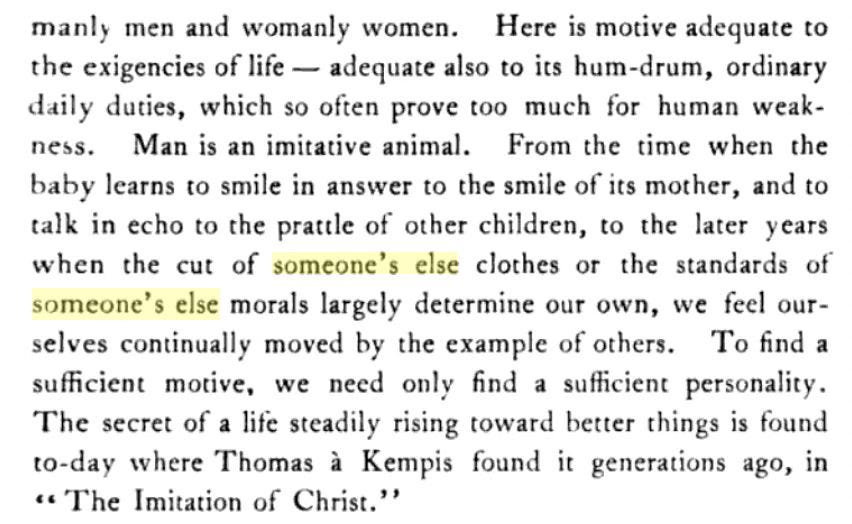
It will never cease to unnerve me that people used to write “someone’s else.”19
50, to be sure, is a pretty number, but I’m trying to cut back on my compulsiveness.
Thank you for spending time with me this year, and I hope that it was as much fun for you as it was for me, and at least occasionally helpfully informative as well.
At the risk of repetition, I express my huge gratitude to those of you who have chosen to subscribe to this series, and I particularly express my huge gratitude to those of you have chosen to support this series financially with no greater tangible reward than being able to kibitz in the comments.20 It means a lot to me, in many ways.
Sallie is grateful too, of course!
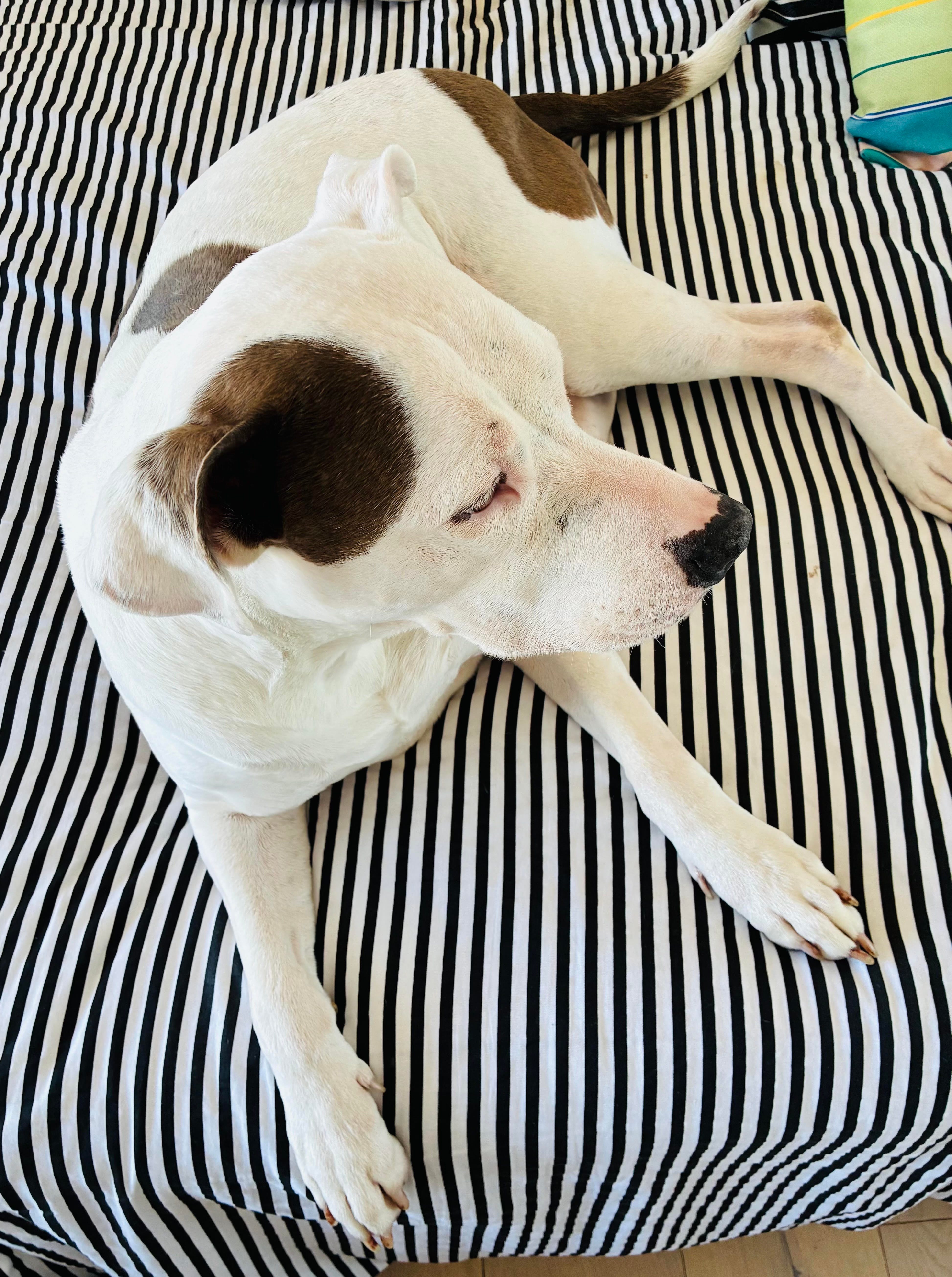
I’ll see you in the new year!21
All best,
Benjamin
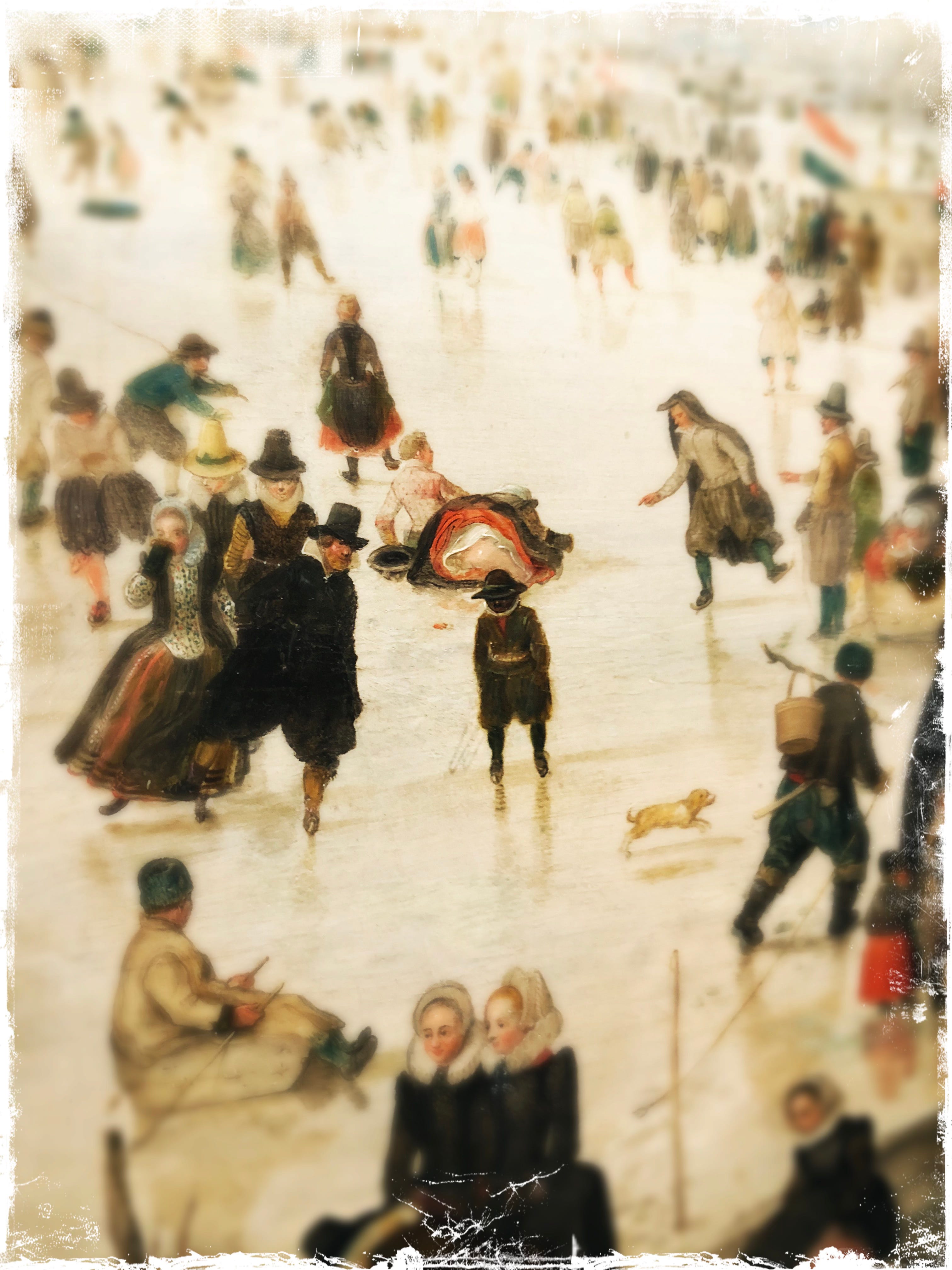
Cover painting: Hendrick Avercamp, A Scene on the Ice Near Town (detail) (c. 1615), National Gallery, London
Or, dare I say it, “someone’s else.” (See item 49, to follow.)
🤮
Translation mine! (That might more literally be something along the lines of “a forgotten because well-executed crime,” or “a forgotten well-executed crime,” but neither of those sounded to me like English, so: 🤷🏻♂️. Honoré, forgive me.)
And here they are.
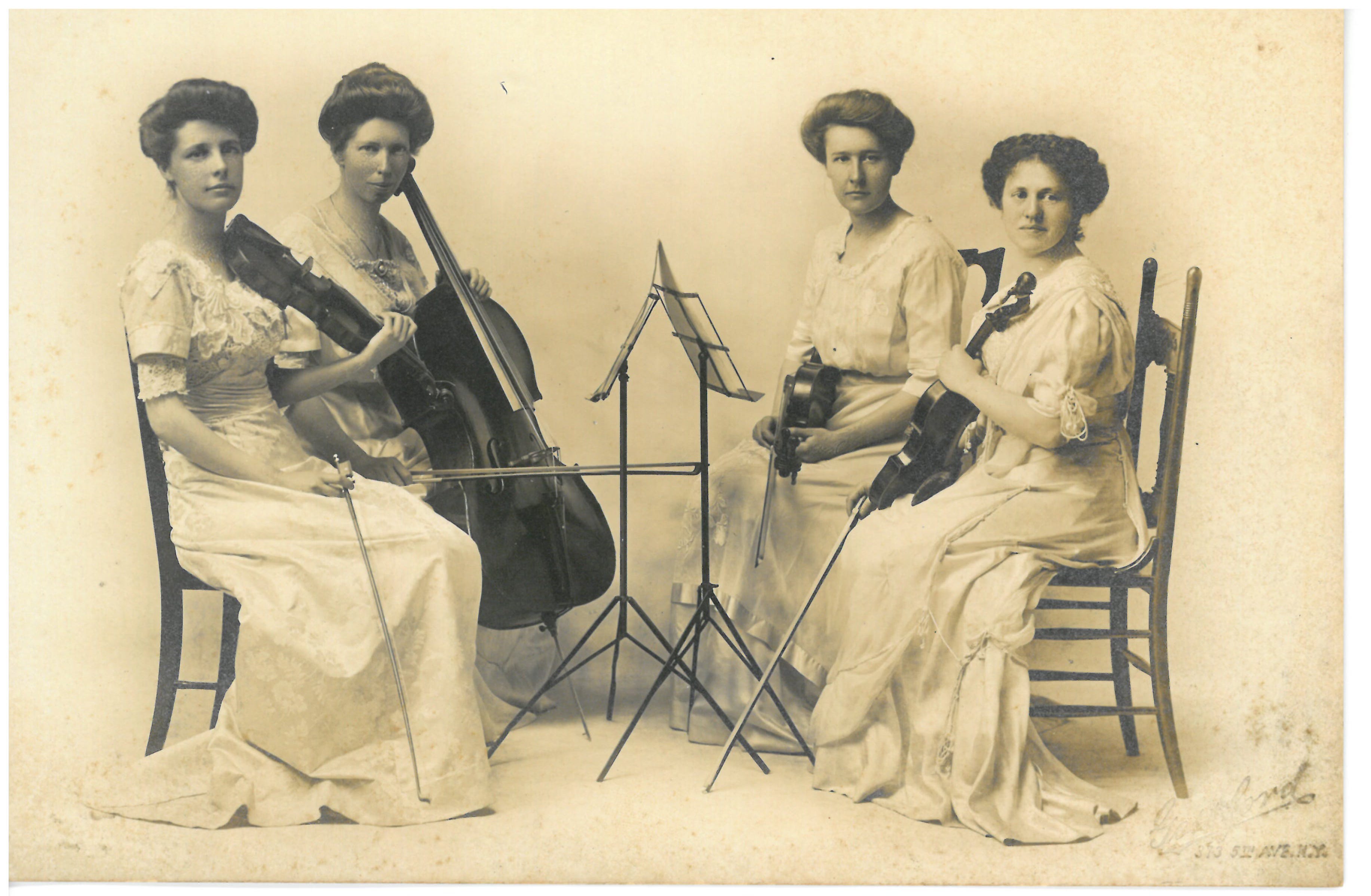
For you, that is.
Full stops.
Intentional comma splice.
Or “doxed” or “vaxed,” natch.
A word that needs no hyphen. See also “highfalutin,” a word that needs neither hyphen nor concluding apostrophe.
People (some people, not you people) can be so proud of being 100 percent incorrect about this.
And yet the past tense of “to pet” is “petted” and not, yeeeesssh, “pet.” English, man, I dunno . . .
Dan Brown probably has a lot to answer for generally, but on this specific point he’s neither the sole nor the first offender.
See what I did there?
“The late Jeffrey Epstein”? I think not.
Do I recall correctly that ChatGPT-generated writing allegedly makes frequent use of “delve”? Well, so do I. Also em dashes.
Besides “King Philip Came Over From Green Scotland,” that is.
I’m not even sure that there are any etc.s here. (You know that when I do weird stuff like “etc.s” it’s to encourage you to be a little weird yourselves, right?) (Within reason.)
(Just thought of another one: agèd.)
No, really.
There’s one b in “kibitz” and two b’s in “kibbutz.” The two words are, by the bye, in no way etymologically related.
Or in the comments.
So many little gifts! Giftitos.
Just going to make this wish and send it shooting into the heavens: I would be so happy if the universe conspired to allow us to see each other IRL in 2026. Bonus if Julie Klam is there and we are somehow breaking unwritten rules.