
I was reading a book the other day . . .
[an exercise in peevishness]

“I was reading a book the other day,” slinky, silken, streamlined Jean Harlow confides to Marie Dressler at the finale of 1933’s Dinner at Eight, inspiring in the rambunctious Dressler one of the biggest takes in the history of the cinema, perhaps even in the history of Western so-called civilization.
“A nutty kind of a book,” Harlow expands.1
I, too, was reading a book the other day, but mine was not nutty. Irritating, yes. Irksome, also yes. Neither especially well written nor especially well copyedited and ultimately abandoned by me on p. 78, and well before then I’d already begun to dart and skim about.
But not nutty.
The book’s subject matter couldn’t have been more my jam, but things hadn’t gotten2 off to a propitious start when, long about the second page of the prologue, the author referred to “Ernst Lubitsch’s famous 1932 comedy Trouble in Paradise”3 and my blood ran cold.
I have this thing about the word “famous,” and my thing about the word “famous” is that you shouldn’t use it. If something is famous, you don’t need to tell your reader that it’s famous. If it’s not famous, all the “famous”ing in the world isn’t going to make it famous.4 “Famous” is simply, as well, a dull, vacuous adjective, exceeded in dull vacuousness only, perhaps, by “special,” and certainly running neck and neck in the tedium Olympics with “celebrated,” “renowned,”5 “distinguished,”6 and “important.”7 (“Iconic” isn’t dull, it’s garbage. I spit on “iconic.”)
Think of all the ways you might describe Ernst Lubitsch’s effervescent, elegant, sophisticated, soigné 1932 comedy Trouble in Paradise that are not “famous,” and, for the sake of pete, choose one of those ways.8
Perhaps, I thought, this will be one of those books I read more for content than for style; that happens from time to time, and sometimes I learn things worth learning. But after a handful of factual misstatements, not even of especially abstruse facts, a grating misquotation of, of all people, Dorothy Parker, immediately followed by the attribution to Mrs. Parker, who said and wrote so many things, of something she neither said nor wrote,9 and a botched recounting of a repeatedly repeated Hollywood anecdote, I’d had enough.
To say nothing of one of the most egregious [sic]s I’ve seen in aeons, two “whom”s where “who”s were called for, and, I suppose inevitably, a “whomever” where a “whoever” was called for.10
There are so many books on this planet I want to read and should (however much I don’t believe in shouldness) read and will probably never get around to reading. The last thing I need to do is to spend a week clenching my jaw beyond the usual jaw clenching we probably all engage in these days. And even as I type these words I’ve got a couple of dozen unread books staring me spang in the face, and that’s just in my office eyeline.
Perfection is elusive, in writing as in all things, but let’s all try, each and every day, a little harder. I will if you will.
If you’d like to feel a little better about your prose and need a quick endorphin shot with a chaser of schadenfreude, you can at least congratulate yourself for not being responsible for this:
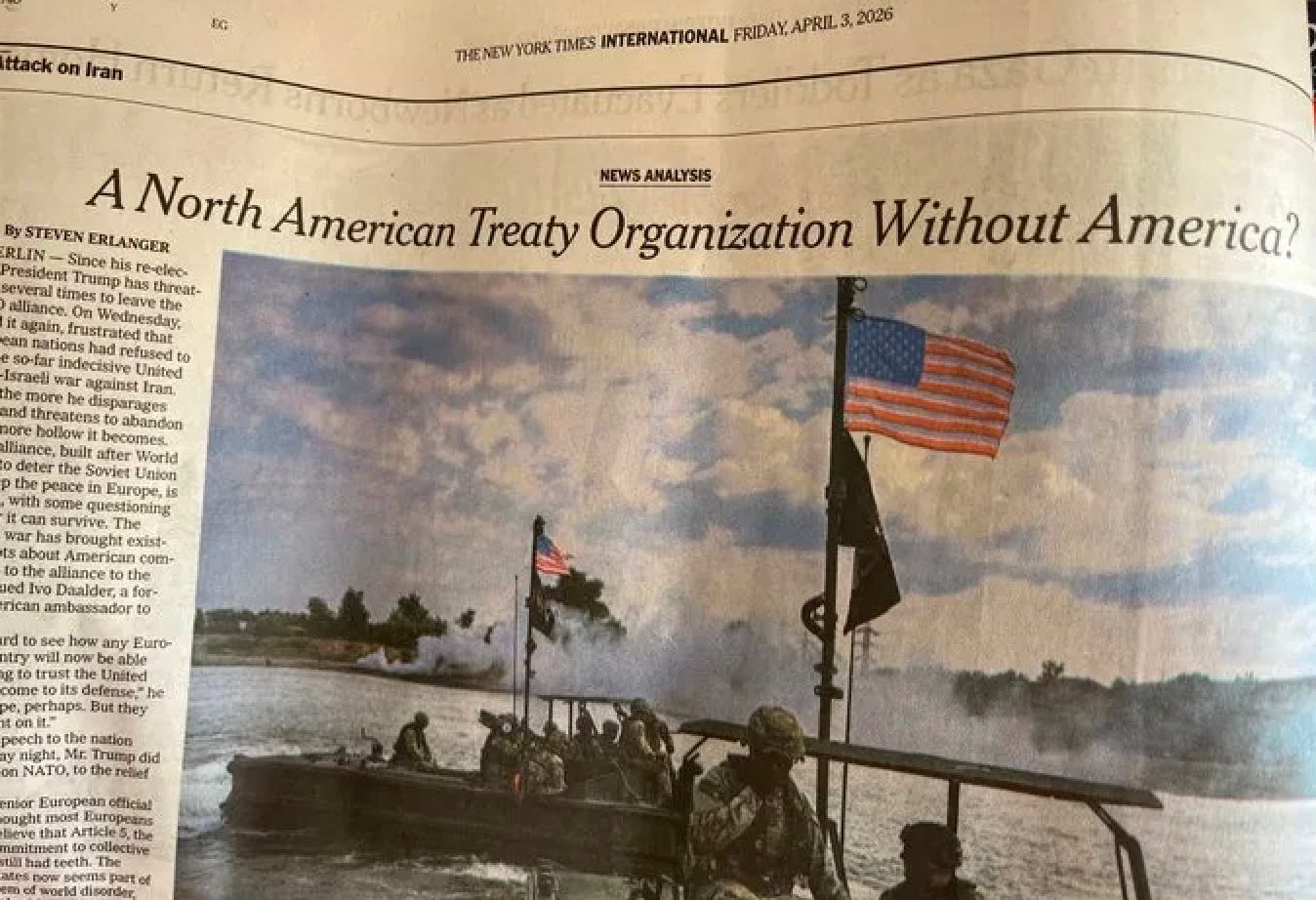
Thank you for indulging me in my crankiness, or at least witnessing it. I am grateful with every A Word About . . . installment that you are here reading my musings. If you have subscribed to this series, I’m even more grateful, and if you have chosen, with no more tangible reward than the ability to comment in the comments, to be a monetary supporter of my work here, well, that’s marvelously above and beyond of you, and do please know that you’re helping keep the lights on in all sorts of ways.
In the meantime, Sallie wishes to be taken for a walk and has adorned herself appropriately.

Though it does look a mite as if she’s wearing doggie tefillin, doesn’t it.
Cover illustration: Rembrandt Peale, or perhaps not Rembrandt Peale, Man Reading by Candlelight (1805–08)11
I fear I’ve already used this Dinner at Eight cold opener in a previous A Word About . . . installment. If so, my apologies to those of you with sharper recall than mine, which is likely most of you.
Brits occasionally assert in my presence that the word “gotten” is some gnarled morsel of American barbarity, which (a) it isn’t (whence do you think we got it?), and (b) too bad.
I have somewhat rewritten the actual phrase in question to prevent you sherlocks from websearching your way to its source. I have no great desire born of compassion to protect either this book or its author, but I also have no great desire born of vindictiveness to publicly trash either this book or its author . . . either.
Also also, I keep seeing writers writing “borne” when they mean, simply, “born,” and I wish they would stop that.
An online chum has called my attention to a memo issued, we are told, by John Reith, the first director-general of the British Broadcasting Corporation, after he’d heard some person referred to on the air as “a famous lawyer”: “The word famous. If a person is famous, it is superfluous to point out the fact; if he is not, then it is a lie. The word is not to be used by the BBC.” (Please pardon my hem-hawing “we are told” above, which I offer only because I can’t, with my little googling digits, source this story quite as securely as I might like, though I do find it repeated identically in a few reasonably reputable-looking places.)
If you’re going to—if you absolutely must—wield “renowned,” please be careful not to misspell it as “reknowned,” as many people insist on doing. Not you people. Other people.
Which also shows up, entirely unnecessarily, at least once that I can recall in the book under present discussion.
I have long waged a campaign against the words I’ve dubbed the Wan Intensifiers and Throat Clearers, among them “very,” “rather,” “really,” “quite,” “in fact,” “of course,” and the dreaded “actually,” but I don’t mind taking a moment to remind the assembled parties that I’ve never told people not to write them. They’re almost impossible not to write; they seem to come to all of us as naturally as breathing. But I do urge writers to, having written whatever they’re writing, search them out and, as possible, delete them. They’ll none of ’em be missed.
Are any of these adjectives particularly substantive? No. But neither are they soporific.
That’s the second neither/nor I’ve offered in a relatively short span here, and I leave it in place not because I couldn’t, with moderate effort, rewrite away one of the two but simply as a reminder to the writerly and copyeditorially inclined among you that conspicuous constructions are, well, conspicuous and not to be overused. See also letting loose with adjectives in triplets, as I allowed myself to do in the first line of this piece (the very first line of this piece, I nearly said, and I wouldn’t have minded had I said it) and making relentless use of “not only X but Y,” which I haven’t done here at all but the day is relatively young.
This sort of arduously failed gentility drives me batty. Please feel free to refresh your memories by reviewing pp. 86–88* of Dreyer’s English, which I trust you keep handy.
Funnily enough, as long as we’re down here chatting, just this morning I was listening to Beatrice Lillie’s recording of “Not Wanted on the Voyage,” a kind of musical shaggy-dog sketch by Nicholas Phipps and Geoffrey Wright in which, early on, forlorn Bea declares, “I found a traveling companion, one whom I thought was my own.” “‘One who,’” I muttered, though I’m not sure whom I was muttering at, Mr. Phipps or Mr. Wright for miswriting, or Lady Peel for misrendering what Mr. Phipps and Mr. Wright might possibly have written correctly.
*En dash alert!
En dash alert encore!
Peevish? Déclassé! I prefer mine Jeevesish.
1) This piece speaks to me, although I reserve the right to refer to Sallie as "the famous Sallie" (to distinguish her from all those un-famous Sallies).
2) The "nutty kind of a book" had to have been Brave New World, right? Go, Kitty!