
No offense, but . . .
[a few words about a few nettlesome words]

Content advisory: I may use below a few words that some of you will find bothersome and that some of you won’t find bothersome at all. Which is basically the point.
My day began yesterday as it usually does, with The New York Times’s Wordle puzzle, and I was ultimately surprised—and my ultimate surprise may constitute a solid 20 percent of why it took me six plays to solve the thing—that the word(le) of the day was DUSKY.
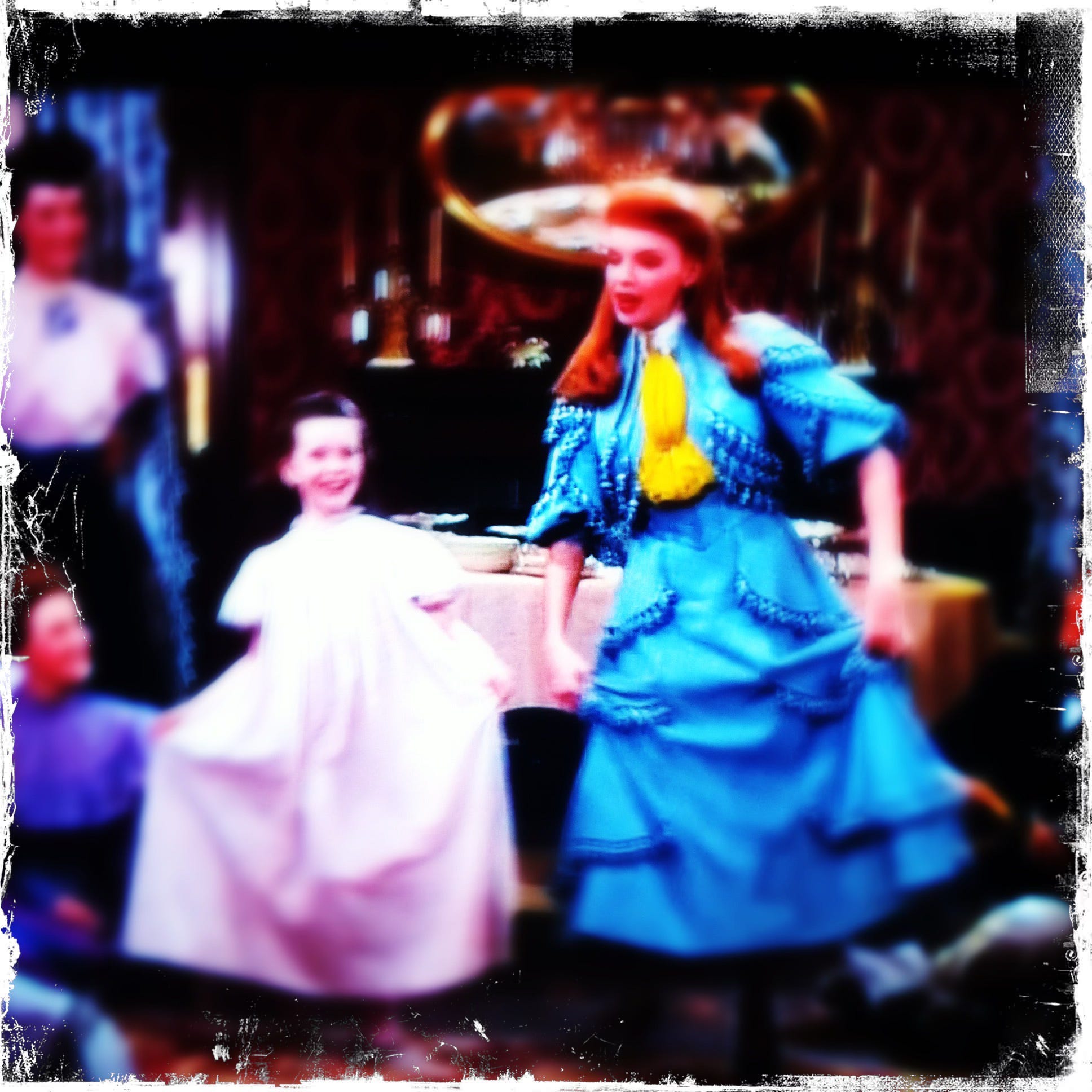
To be sure, “dusky” has a perfectly neutral meaning—“somewhat dark in color,” as our friends at Merriam-Webster advise us, as in, don’t y’know, “dusk”—but it also bears a somewhat problematic-to-offensive weight as it’s been historically applied to skin tone, as in, for instance, for you Meet Me in St. Louis fans, the verse of the 1902 megahit “Under the Bamboo Tree,” which begins “Down in the jungles lived a maid / Of royal blood though dusky shade.”1
Now, it’s quite possible that some of you are happily unaware of “dusky”’s2 trying past, and more power to you if so—as I learned not so very long ago, amid a bit of online chitchat about the name of Ray Bolger’s farmhand character in The Wizard of Oz, that “hunk” and “hunky” as epithets for a Central European immigrant to the United States seem to be unknown to a solid portion of the present populace (or at least to the people I chitchat with online)3—but I’d have expected the usually prudent, at least insofar as puzzles are concerned, Times to have crossed that particular word off its Wordle dance card, leaving it perhaps playable but not a potential winner, in the way that the Times’s Spelling Bee is famous/notorious for disallowing words often if not universally taken to be offensive, including, just to pluck up one of the safer ones, “nappy,” whose disqualification always comes as an irksome surprise to our Brit cousins for whom it’s, inoffensively, a diaper.4
I note, then and moreover, that in yesterday’s Bee one of the playable words was “niggling,” which is to be sure as etymologically pure as a word can be but is not, perhaps, the first word I’d reach for nowadays if I were trying to describe something pettily irritating, in the same way that one tends—or at least I tend—to avoid the equally innocent “snigger”5 and the notorious “niggardly,” a word that, as has been established repeatedly, is innately blameless but sounds anything but.6
Any old way, next up in my semi-indolence yesterday morning was happening upon a report7 that an imminent Japanese revival of everyone’s favorite Jule Styne–Stephen Sondheim–Arthur Laurents8 musical is going to be presented as Rose, the title it’s borne since 1959 having been deemed by its current producers unacceptable because of the eponymous word’s derogatory use as applied to the Romani people.
I leave you to your own sentiments on the subject. I simply choose to recall the story9 of Arthur Laurents’s gingerly approaching the originally eponymous Miss Lee to inform her that the only way he could see fit to dramatize her memoir was to make the musical’s libretto about her mother, to which the originally eponymous Miss Lee responded, “Darling, I don’t care what it’s about—as long as it’s called Gypsy.”
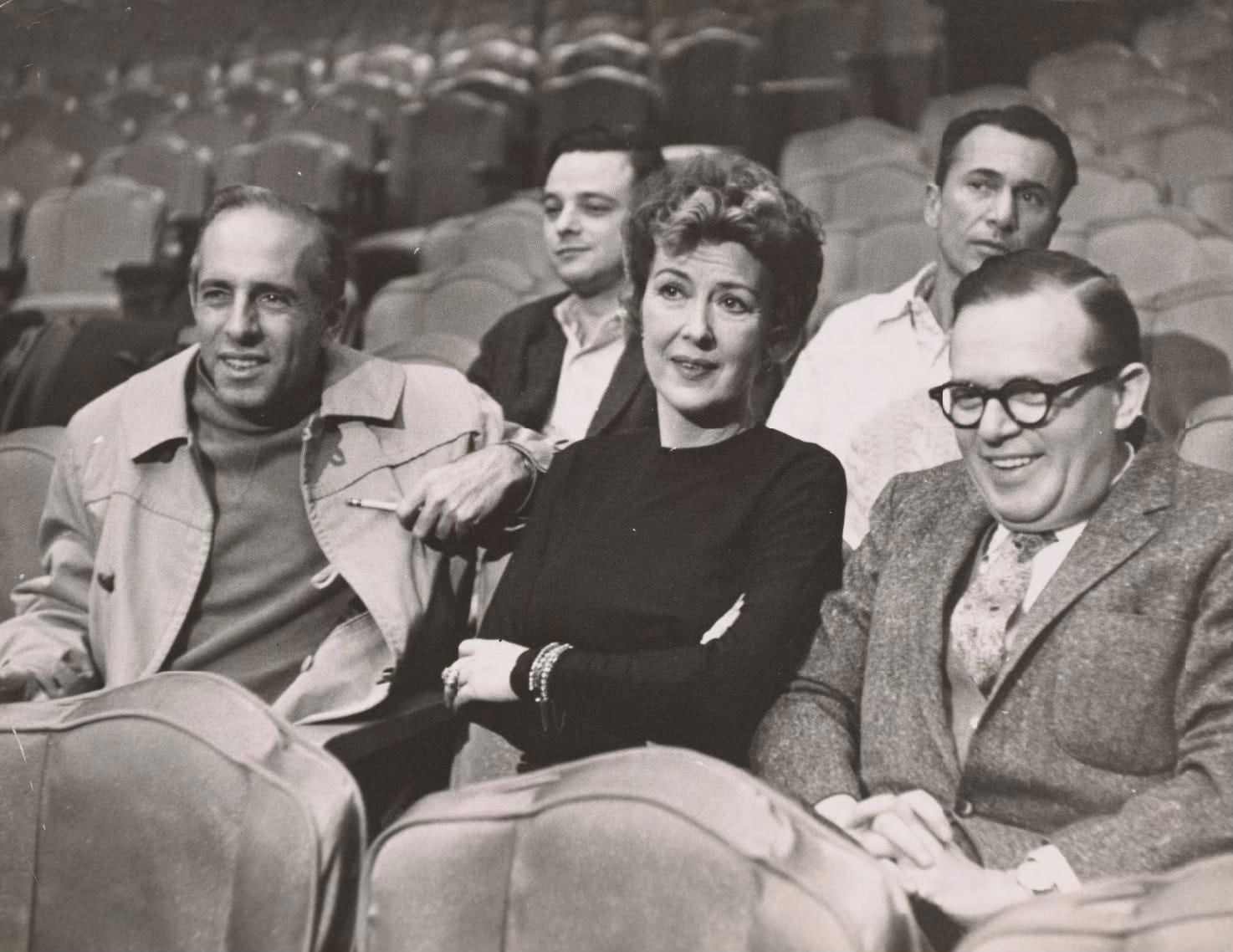
When the 2024 Broadway revival of the musical was in the works, certain chatboard denizens were insisting that the show be retitled. I particularly, and cringingly, recall the suggestion “Rose and Her Daughters,” which sounds to me like either a third-rate Sholem Aleichem sequel or a Lower East Side knockoff appetizing shop peddling dubious whitefish salad.
Well, not to give anyone any ideas—and an erudite friend immediately pointed out, of the report about the Japanese revival, that it included not word 1 about its producers having secured permission from the various estates to retitle the show, which suggests that they’ve gone rogue, and perhaps none of this will ever happen—but: If you’re going to rename Gypsy, “Here She Is, Boys!”—or, at the very least, “Here’s Rose!”—is sitting right there.10
I hope that you are all doing as well as you can possibly be doing in these absolutely impossible times.
I express my ongoing gratitude to subscribers, and particularly to the voluntarily paying subscribers who get no more bonus for their contribution than the right to kibitz with me in the comments. Your support means the world to me.
Sallie is grateful as well, of course. Characteristically contemplative, yes, but grateful.
And more thanks than usual—and my usual thanks is a lot of thanks—to my friend Jonathon Green, a.k.a. Mister Slang, whose brilliant work I incessantly rely on, as today’s links demonstrate. And thanks as well to Kevin Daly and John Baxindine, who got me to and through today’s missive.
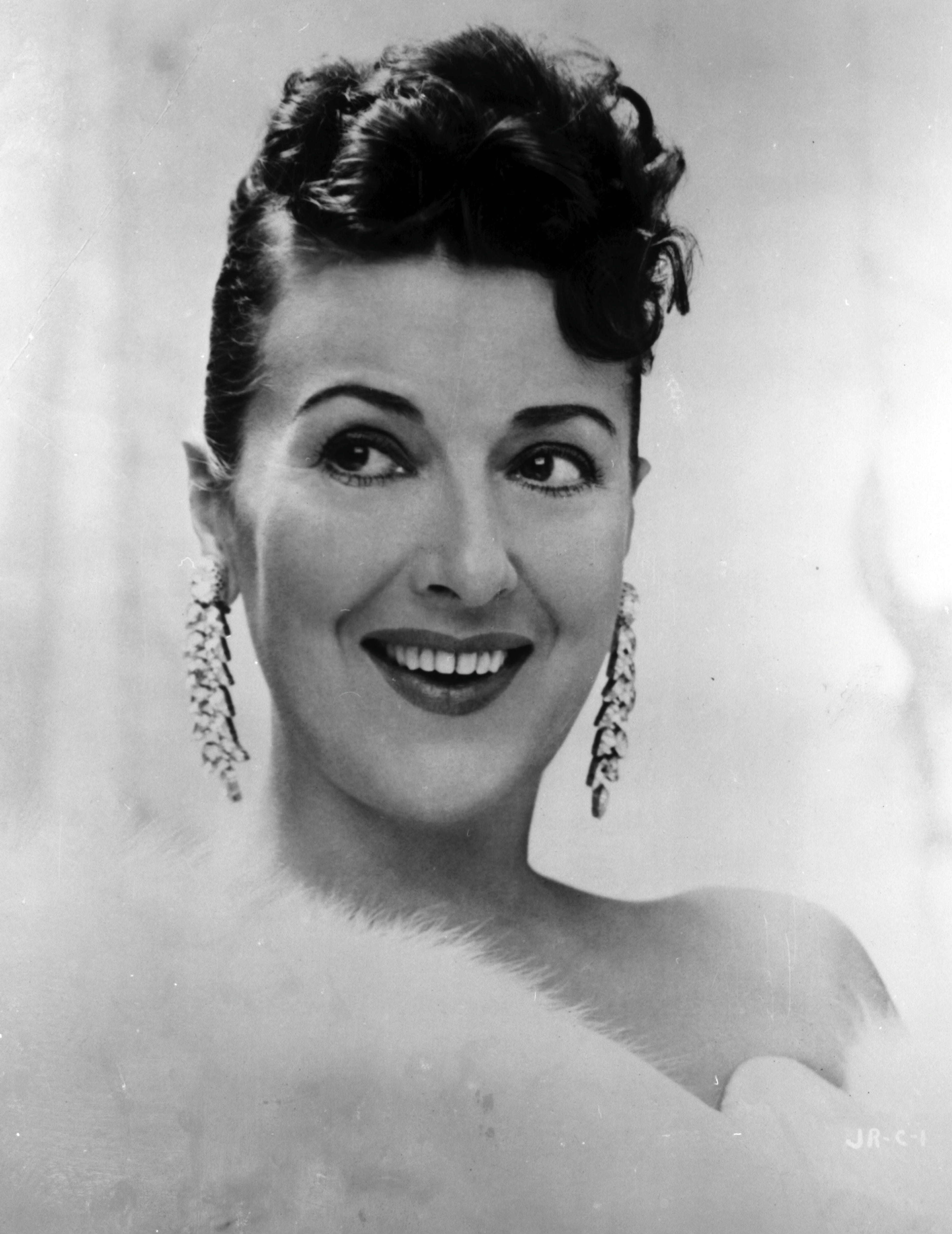
Cover photograph: Gypsy Rose Lee (1911–70). At these prices, she’s an ecdysiast.
Man oh man, that “though,” though. On top of everything else.
If you’re going to possessivize something in quotes, my friends, this is how you do it.
I suppose that it’s at least possible that skinny little Ray is called “Hunk” in the way that gargantuan men are sometimes ironically nicknamed “Tiny,” but I wouldn’t bet the Gales’ farm on it.
I’m also, as long as we’re down here, recalling the time, years ago, when as a copy editor I had to delicately, tactfully explain to a writer why it might not be advisable to refer to a character’s lustrous hair as “sheeny.” As it happened, the writer was as shocked to learn that the word is an antique slur as I was shocked to learn that someone wouldn’t know that.
You also can’t, at the 🐝, play a word that is occasionally used, literally and/or figuratively, to refer to a dent or crack in a suit of armor, and you’ll note that I’ve stopped myself from typing it out here, however much I recognize its generic blamelessness. The lines we draw can be so arbitrary, it seems. It’s also never been a winning Wordle word (though I’m pretty sure I’ve played it; needs must when the devil drives, and all that), and I bet it won’t ever be one either.
LIZA. You see, it’s like this. If a man has a bit of a conscience, it always takes him when he’s sober; and then it makes him low-spirited. A drop of booze just takes that off and makes him happy. [To Freddy, who is in convulsions of suppressed laughter:] Here! what are you sniggering at?
FREDDY. The new small talk. You do it so awfully well.
LIZA. If I was doing it proper, what was you laughing at?
The thing about “niggardly,” as I’m sure I’ve said any number of times but it bears, I think, repeating, is that there are plenty of other words that one can use to describe miserliness, including—besides of course “miserly”—“stingy,” “penny-pinching,” “mean,” and “parsimonious,” so the only people apt to be going out of their way to use “niggardly” in this the year two thousand twenty and six are those who wish to use it defiantly, as a bludgeon, hiding behind its Old Norse origins while snickering, ahem, at those whom it irks and/or outrages. More power, I suppose, to such people for showing us the entirety of their hindquarters.
No particular reason for me to link to it, so I won’t; it’s basically just a regurgitated press release anyway. I’m sure you can intrepidly find it if you’re keen to read it.
En dash alert!
I’m having a hard time authentically authenticating this story, which I guess I’m going to have to concede is one of those “Oh, I’m sure I read that somewhere” stories. I certainly can’t find it in so many words in Arthur Laurents’s memoir Original Story By, which does, though, acknowledge that it was in Gypsy’s contract that the musical must be titled Gypsy (“everything else was up for grabs”) and also includes her comment, in response to Laurents’s asking her to verify where her stage name came from (she was born Rose Louise Hovick, as, if you’ve made your way to this footnote, you probably already know), “Oh, darling, I’ve given so many versions, why don’t you make up your own?”
Or call it “Momma Rose” and just drive a stake through my heart while you’re at it, why don’t you.
(Another friend offered a title uniquely appropriate for this particular revival, and I choose not to repeat it here—though I burst out loud laughing when I read his suggestion.)
Oh, the lengths to which I would go not to possessivize something in quotes.
Thank you for providing a posting that induced incoherent laughter in this reader! You are right. So timely, this laughter. Balances out all the crying.
Re: Footnote 9. That's not FAIR. Spill it! (she said in a very joking and friendly way...).